

TikTok - Videos, Shop & LIVE review
 Analysis by GetAllApps
I think TikTok is most useful when I treat it as a place to share a quick mood, joke, idea, or discovery rather than as a replacement for a proper conversation. Its short-video format makes it easy to send someone a clip that says what I might struggle to put into words. That can make everyday communication feel lighter and more immediate, though it can also leave a lot unsaid if a video becomes a stand-in for talking.
As a social app from TikTok Pte. Ltd., it is free to install and has a Teen content rating. The scale is striking: it has more than a billion installs, an average rating of 4.0 from around 70 million ratings, and about 2.3 million written reviews. Those figures suggest broad appeal, but they do not tell you whether its fast, video-first style will suit your own habits. I’d recommend trying it with a clear idea of what you want from it: following friends and creators, finding entertaining clips, or sharing your own.
Sharing a thought without starting a long conversation
One of TikTok’s strongest social uses is low-pressure sharing. A friend can send a funny clip, a recipe, or a short explanation, and the recipient can respond with a reaction or another video. It gives people a shared reference point, which can be handy when a full catch-up is not practical. I find that especially useful for keeping a group chat lively without expecting everyone to be available for a lengthy exchange.
That convenience has a limit. A clip can communicate a feeling, but it does not reliably explain why someone sent it. If the topic is sensitive, personal, or time-critical, I would use a direct message or a call instead of hoping a video makes my meaning clear. TikTok works best as a prompt for conversation, not as a substitute for clarity.
For example, if I come across a short cooking idea while deciding what to make for dinner, I can share it with the person I’m eating with and ask whether it sounds good. That is more useful than forwarding a vague “we should try this sometime.” But if plans need to be settled, I still need to say when and where. The app can spark the exchange; it cannot make an ambiguous message precise.
The most practical way to use TikTok socially is to pair a video with a sentence of context. A brief note such as “This reminded me of our trip” or “Would you actually make this?” gives the other person something to respond to beyond the clip itself. That small habit can turn passive forwarding into a real conversation.
How its conversation rhythm differs from other social apps
Compared with messaging apps, TikTok is less about maintaining a continuous, orderly thread and more about passing around individual pieces of media. Compared with photo-focused social platforms, it puts moving images and sound at the center of the experience. That makes it particularly good for humor, demonstrations, performances, and quick explanations, but less suited to keeping practical information easy to retrieve later.
If I need a record of an address, a schedule, or a decision, I would rather put it in a message thread or calendar. A video feed is designed for discovery, not for serving as a tidy archive of commitments. The distinction matters: TikTok can make contact feel effortless, while a conventional chat is often better when the conversation needs a clear beginning, a follow-up, and a reliable reference point.
The app’s social value also depends on who I follow. A feed built around friends and familiar interests can feel like a stream of shared recommendations. A broad mix of creators can offer more variety, but it may feel less personal. I would start by following people and subjects I genuinely care about, then review whether the resulting feed reflects how I want to spend my attention.
Discovery is enjoyable, but the feed can take over
The same quick format that makes sharing easy also makes it easy to keep watching. One clip leads into another before I have decided what I came to do. This is the app’s clearest everyday trade-off: it can fill a short break with something entertaining, but the feed can stretch that break without a natural stopping point.
I’ve found it helpful to open TikTok with a purpose. If I want to check a message, find a particular kind of tutorial, or share a clip, I try to do that first rather than treating the feed as an automatic default. When I only have a few minutes, deciding in advance what counts as “enough” makes it easier to leave. This is not a special setting or a promise that the app will manage my time; it is simply a habit that puts the choice back with me.
There is also a difference between watching a video and absorbing it. Short explanations can introduce an unfamiliar topic or show a technique clearly, but a compressed clip may omit context. I treat advice that affects health, money, safety, or important decisions as a starting point for further checking, not as settled guidance. TikTok’s pace rewards concise presentation, and concise presentation is not the same thing as completeness.
For families and younger users, the Teen rating is a useful signal to take seriously, not a guarantee that every viewing experience will feel appropriate. I would discuss what kinds of accounts and subjects are welcome, and agree on practical limits together. A teenager who wants a place to watch and share videos may find it engaging; a parent looking for a strictly controlled, quiet communication tool should consider whether a different kind of app would fit better.
Small habits that make sharing clearer
When I send a clip, I try to think about the recipient before pressing share. Is it relevant to them, or am I sending it only because it appeared in my feed? A handful of thoughtful recommendations can feel personal; a constant stream can become noise. This is a useful distinction in group chats, where one person’s amusing discovery may interrupt a conversation everyone else is trying to follow.
I also separate “watch this” from “please reply.” If I need an answer, I say so directly and include the question in text. That prevents a common mismatch: one person assumes a clip is just for fun, while the other expects a decision. For an invitation, a useful pattern is to send the video as inspiration and then write the actual date or plan separately.
Another practical approach is to notice which parts of the app leave me feeling connected and which leave me feeling scattered. Sharing a clip with a friend may lead to a genuine exchange; watching for longer than intended may leave me with little to say about what I saw. I would keep the first use and adjust the second. The point is not to turn every moment online into a productivity exercise, but to make sure the app is serving the social purpose I chose.
Boundaries matter as much as the content
TikTok is not the right channel for every relationship or moment. If I need a thoughtful reply, a private conversation, or a dependable record, I choose a format that supports that need. If someone is slow to respond, I also avoid assuming that silence means anything in particular; a clip-based social app encourages quick reactions, but people’s availability varies.
For people who prefer reading, longer discussions, or a calmer pace, TikTok may feel noisy. A messaging app is better for direct coordination, while a forum or long-form platform may be a better fit for detailed discussion. Those alternatives do not offer the same fast stream of video discovery, but that is precisely why they can be more comfortable when attention and context matter more than novelty.
There is a social boundary to consider as well: not everyone wants every interest or moment turned into something to post. I would ask before sharing content that involves another person in a personal way, and I would avoid treating public visibility as the default for private jokes or sensitive situations. The app makes it easy to create and circulate video; good judgment still comes from the people using it.
TikTok is free, with in-app purchases listed from five cents to $9,999.90 per item. That wide range is a reason to pay attention to purchase prompts and account settings, especially if a device is shared or used by a younger person. I would make sure the person using the app understands that free access and optional purchases are not the same thing.
Who I would recommend it to
I would recommend TikTok to someone who enjoys discovering short videos, likes sharing specific clips with friends, or wants to publish in a format built around quick visual expression. It can be an easy way to turn a niche interest into a source of new ideas and conversation. Its social character is strongest when people use it to exchange things they genuinely want to discuss, rather than forwarding every amusing item they encounter.
I would be more cautious recommending it to someone who is trying to reduce screen time, dislikes rapidly changing feeds, or needs conversations to stay organized and searchable. In those situations, a messaging app or a slower, text-based community is likely to be a better everyday home. TikTok can still be enjoyable in small doses, but its design makes intentional use more important than it would be in a simple chat app.
A lively social tool when I set the pace
Released on July 9, 2015, TikTok has become a familiar part of social life for a huge audience, but popularity alone is not a reason to install it. I like how quickly it can give friends something to laugh about, learn from, or respond to. I also think its strongest moments depend on context: a shared video is a good opening, while a clear message is still better for plans, sensitive topics, and decisions.
My overall view is positive for people who want video-led discovery and casual sharing, with an important caveat about attention. I would use it deliberately, add a few words when a clip needs explanation, and move important conversations somewhere more direct. If that balance sounds comfortable, TikTok can make everyday social contact feel playful and immediate. If you want quiet, structure, or a feed that naturally tells you when to stop, another option may suit you better.
Pros and cons
Pros
- A personalized For You feed quickly surfaces videos matching your interests.
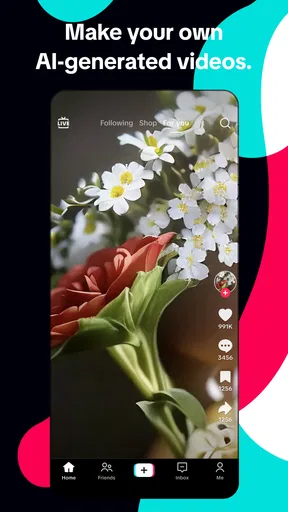
- Built-in editing tools make short videos easy to create on a phone.
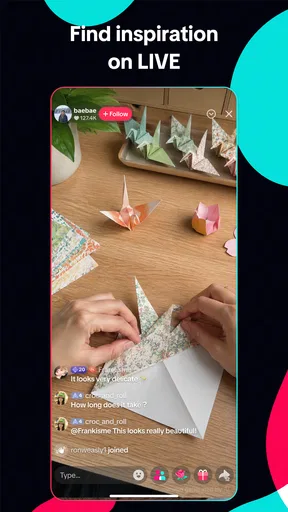
- LIVE streams let viewers interact with creators in real time.
- The search tools help users discover trends and niche creators.
- Privacy settings offer control over who can view or interact with content.
Cons
- The endless feed can make it easy to spend more time than intended.
- Some trends and recommendations may expose users to unsuitable content.
- Video creation can use substantial mobile data and battery power.
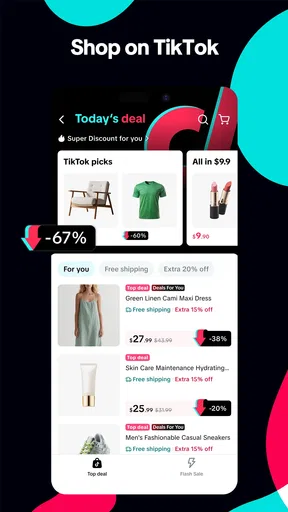
- Shopping availability and product selection vary by region.
- Frequent notifications may feel distracting unless carefully managed.


